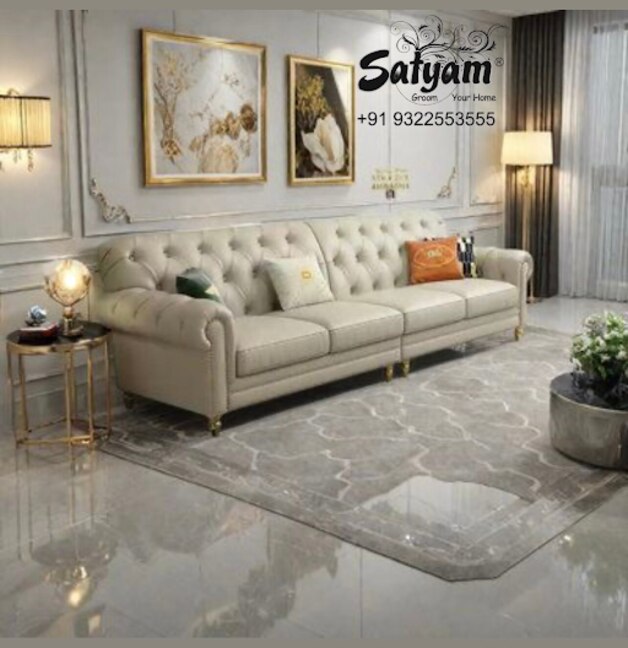
A sofa can fit your floor plan yet fail at the doorway, overwhelm the room, or feel uncomfortable after ten minutes of sitting. By checking the delivery route, usable dimensions, layout, construction, comfort specifications, and upholstery performance, you can narrow the choice to models that suit both your room and daily routine.
Key takeaways
- Measure every doorway, corridor, lift, and stair before ordering.
- Choose sofa depth and height around how you sit and stand.
- Inspect the frame, suspension, foam density, legs, and modular joints.
- Match upholstery performance to children, pets, sunlight, and daily use.
Measure the room and the entire delivery route before choosing a size
Measure the narrowest point on the route before trusting a sofa’s showroom dimensions. Record the sofa measurements, including its packaged height, width, depth, and diagonal length, then compare them with your living room dimensions and every access point.
A sofa can fit the floor plan yet fail at the entrance, a tight corridor turn, or a staircase landing.
- Measure doorway clearance with the door fully open, including the frame and handle. Use the narrowest clear width, not the nominal door width.
- Take lift and staircase measurements: lift-door width and height, cabin depth, stair width, landing size, ceiling height, and the tightest turning point.
- Mark the sofa footprint in the room with masking tape. Keep the main walkway open, allow doors and windows to operate, and leave clearance around the coffee table.
- Ask the retailer for packaged dimensions and the safe tilting angle. Check whether delivery staff can remove legs, cushions, or doors without damaging them.
| Area | Check | What failure looks like |
|---|---|---|
| Living room | Outside width, depth, and usable seating width | Arms consume space, leaving less seating than expected |
| Delivery route | Narrowest doorway, corridor, lift, and stair turn | The sofa cannot be tilted or turned around a landing |
| Sofa-bed or recliner | Opened bed or fully extended operating envelope | The mechanism blocks curtains, outlets, coffee table, or the main walkway |
For a sofa-bed, measure both sitting and sleeping positions; for a recliner, check the manufacturer’s rear and front clearances rather than its closed footprint. Record every measurement in writing before ordering.
Match the sofa configuration and scale to your room layout
Choose the smallest sofa arrangement that gives everyone a seat while preserving a clear walking route around the coffee table and between doors. A two-seater sofa suits a compact room or a seating pair; a three-seater sofa works across a wider wall, but broad arms can reduce its usable seating width.
| Configuration | Best fit | Crowding check |
|---|---|---|
| Two-seater sofa | Small rooms, reading corners, or secondary seating | Keep the remaining floor area open for circulation |
| Three-seater sofa | A longer uninterrupted wall in a medium or large room | Check that arms and side tables do not narrow the walkway |
| L-shaped sofa | Open-plan rooms that need a defined conversation zone | Keep the chaise or return away from doors and main routes |
| Sectional sofa | Flexible layouts with several users or changing needs | Judge the complete sectional sofa size, not one module alone |
Compare usable seat width rather than outside width. Arm thickness can consume 20–30 cm or more, so two sofas with the same external width can provide noticeably different seating capacity.
For a modular arrangement, ask how sections lock together. Positive connectors prevent modules creeping apart on smooth tile or polished floors; also confirm that replacement connectors, labelled covers, and individual cushions are available. Removable covers are easier to clean and repair than fixed upholstery.
A low, straight sofa usually keeps a small room visually lighter, while a deeper corner arrangement suits an open plan that needs zoning. Leave the largest clear area where people naturally walk.
Choose seat dimensions for lounging, conversation, television, and easy standing
Comfort depends on matching the sofa to your body and routine, not choosing the deepest or softest model. Test it seated: your feet should rest flat, knees should sit near a right angle, and your lower back should meet the cushion without leaning backward.
| Choice | Practical starting point | Best fit |
|---|---|---|
| Standard seat | 45–50 cm sofa seat height and 53–60 cm sofa seat depth | Conversation, television, and easy standing |
| Deep seat | 60–70 cm depth | Lounging, but shorter users may need a lumbar cushion |
| Low seat | Below about 45 cm | Relaxed posture, but harder for older adults to rise from |
| High back | Supports the shoulders and head | Upright viewing and longer sitting sessions |
| Narrow arms | More usable seating width | Smaller rooms or households needing three seats |
Check usable seat width, not outside width. Broad arms can consume 20–30 cm or more, leaving less room than a narrower-armed sofa of the same overall size.
Choose cushion firmness by sitting for several minutes. Soft cushions suit sinking into the sofa; medium-firm cushions support conversation and standing. Ask for foam density and firmness separately: a high-density cushion can still feel soft.
For a reclining model, measure the complete operating envelope. Confirm the manufacturer’s rear and front clearances, protect the main walkway from the extended footrest, and check that wall outlets remain accessible. A wall-hugger reduces rear clearance but does not remove the need for front space.
Inspect the frame, springs, foam, legs, and modular connections
A sofa that feels firm in a showroom can still fail at its joints. Press the frame near the arms and front rail: it should feel rigid, without twisting, creaking, or movement between components.
- Frame: Ask whether it uses a solid wood sofa frame, an engineered wood frame, or a metal sofa frame. Solid timber is not automatically superior; examine glued, screwed, or dowelled joints rather than stapled corners. Engineered panels need sealed edges and strong internal reinforcement, while metal frames should have clean welds and no visible rust.
- Support: Ask how the sofa springs and webbing are arranged. Sinuous springs should sit evenly and return after you press them; webbing should feel taut, not sag beneath the cushion. Uneven support creates a dip that foam alone cannot correct.
- Cushions: Ask for the foam density, whether the foam can be replaced, and whether each cushion is reversible. Foam holds its shape consistently but can develop a permanent compression area; fibre or feather filling needs regular plumping and rotation.
- Legs: Choose legs bolted into the frame, not thin legs fixed only to the underside fabric. Check that every leg sits flat and does not wobble when you push the sofa sideways.
For modular seating, verify that sections lock with positive clips, brackets, or latches. Without connectors, modules creep apart on polished floors. Ask whether replacement connectors, covers, and individual cushions are available; removable, labelled covers are easier to clean and repair than fixed upholstery.
Compare upholstery performance with your household and interior style
Choose upholstery based on household mess, daily use, sunlight, and cleaning tolerance—not showroom appearance. A pale, textured cover can suit a calm, low-use room but punish a home with pets, children, or frequent meals.
| Material | Best fit | Check before buying |
|---|---|---|
| Performance fabric sofa | Heavy use, spills, and active households | Confirm the cleaning code, stain-treatment limits, and intended-use category |
| Velvet upholstery | Formal or luxurious interiors with controlled use | Check for shading, pressure marks, and vacuuming instructions |
| Boucle sofa fabric | Soft, tactile rooms with limited snag risks | Inspect the loop size; claws, buckles, and rough clothing can catch it |
| Linen-look fabric | Relaxed, natural schemes and easier visual coordination | Ask whether it is washable, removable, and resistant to creasing |
View colour samples in your room in the morning, afternoon, and artificial light. Match curtains or blinds by undertone and texture rather than identical fabric; pair one patterned or strongly textured element with a quieter solid to create hierarchy.
Ask for the abrasion test method: Martindale and Wyzenbeek counts are not interchangeable, and neither predicts pilling, fading, snags, or seam failure alone.
Choose high-resilience foam for firmer support, feather or fibre for a softer sink, and a combination if you want both; confirm whether the filling needs regular plumping. For modular sofas, check that sections lock securely and that labelled replacement connectors, covers, and individual cushions remain available.
Satyam Furnishing 9322553555 can help you compare upholstery samples while you verify those repair and care details.
Related products
 | Wooden sofas and Dining chair Luxury carved wooden sofas and Dining chair ₹50000 Minimum Order Quantity :- 01 Piece Usage/Application :- Home Material :- Wooden Size :- As Per Requirement Satyam Furnishing in Thane is a trusted... View product → |
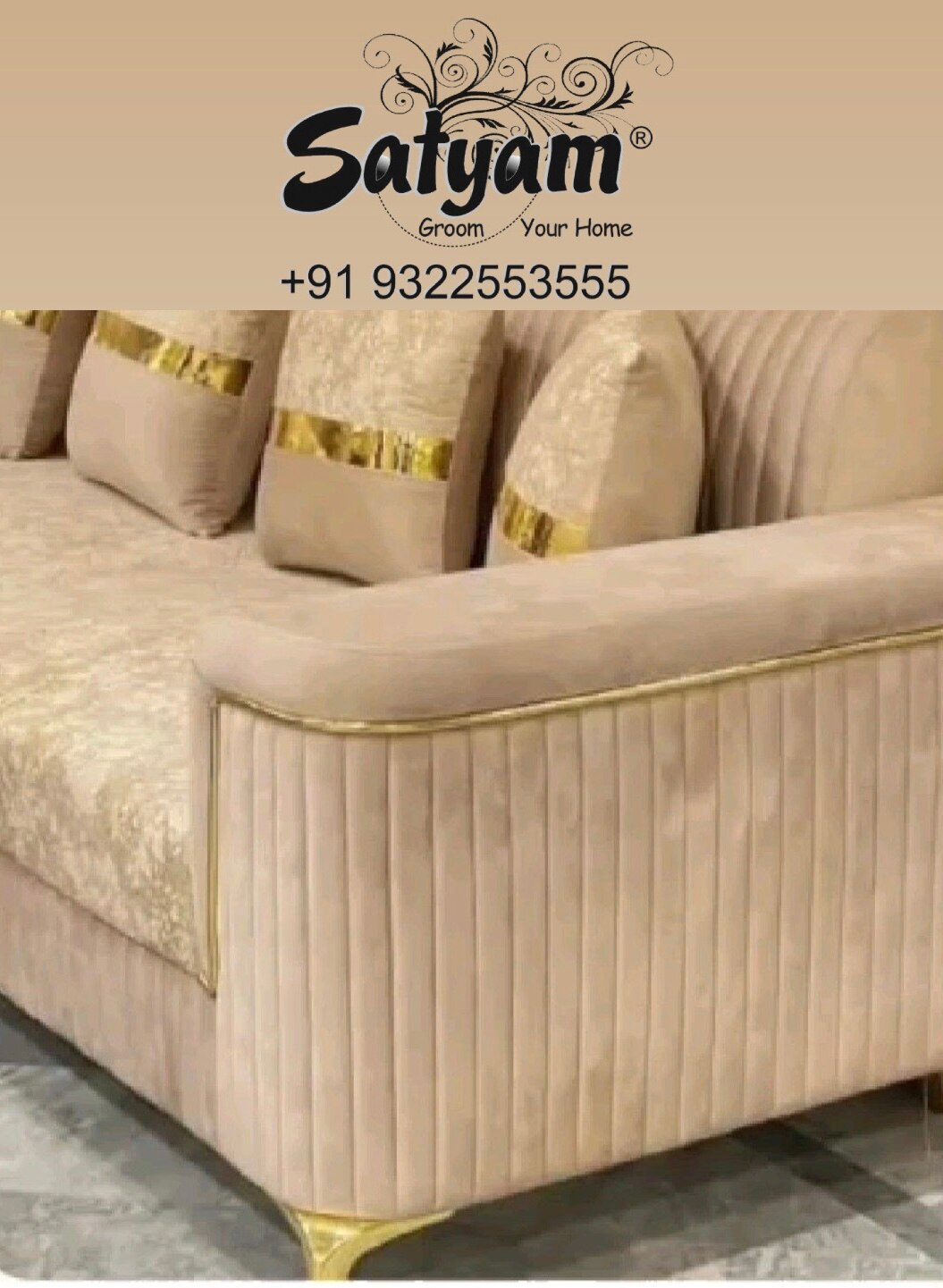 | Sofa Sofa ₹40000 Satyam Furnishing in Thane has become a well-known destination for customers looking to enhance the comfort and style of their homes. |
Frequently asked questions
What should you measure before buying a sofa?
Measure the living room and every delivery point, including doors, corridors, lifts, stairwells, turns, and the narrowest opening. Record the sofa’s packaged height, width, depth, and diagonal length.
How do you choose the right sofa size and configuration?
Compare the sofa’s footprint with the room’s circulation paths, door and window positions, television location, and other furniture. Select a straight sofa, sectional, chaise, or modular design that fits the layout without blocking movement.
What seat dimensions suit different living room activities?
Choose seat depth and height based on whether you prioritise upright conversation, television viewing, relaxed lounging, or easy standing. Deeper seats suit stretching out; shallower seats support a more upright posture.
What should you inspect in a sofa before buying it?
Check the frame material and joinery, suspension system, cushion foam, legs, and modular connectors. Sit on the sofa, test for movement and noise, and ask how each component is repaired or replaced.
How should you compare sofa upholstery?
Compare fabric or leather against abrasion resistance, stain exposure, pet claws, children, sunlight, cleaning instructions, and expected daily use. Choose texture and colour alongside the room’s interior style.